Sea freight – what it involves, transit times
For business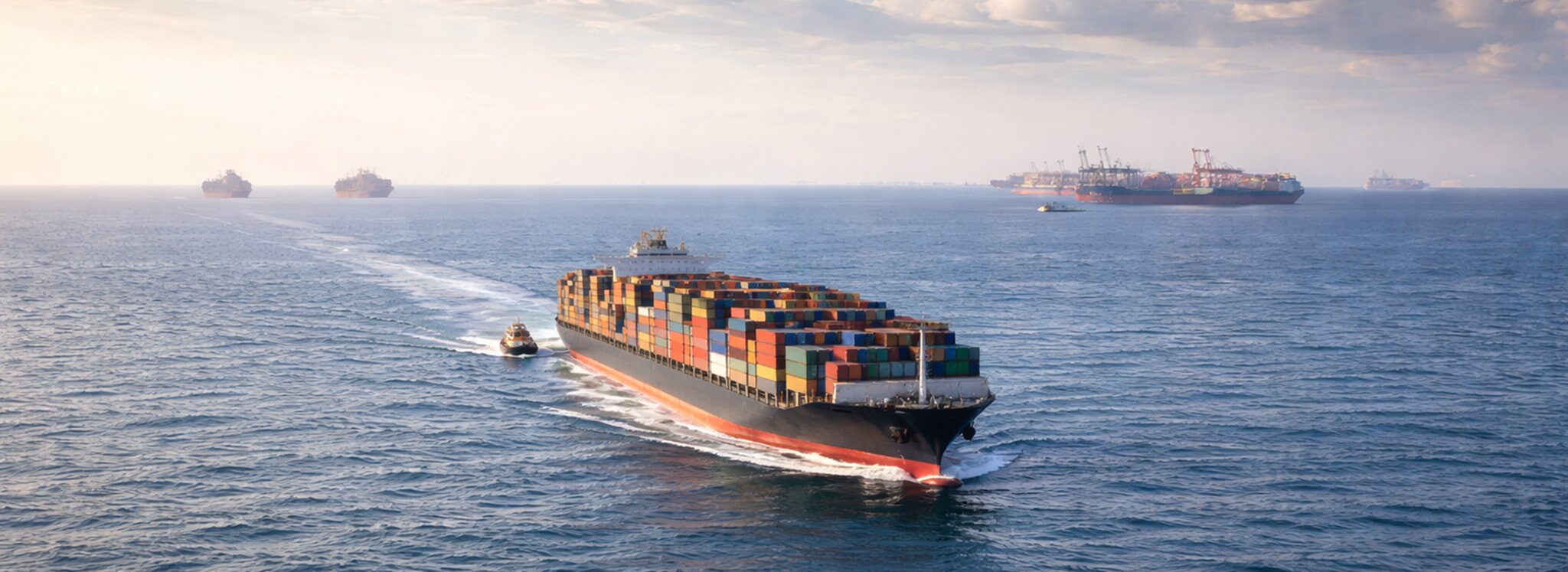
AI-generated graphics
AI-generated graphics
11 March 2026
Over 80% of global trade is carried out by sea. Every day, thousands of ships sail the oceans, transporting raw materials, electronics, food and vehicles between continents. Sea freight remains the cheapest method of transporting large volumes of goods over long distances, although it requires patience and a good understanding of the procedures. Find out how commercial shipping works, what documents are required and what factors influence freight costs!
What is maritime transport and what role does it play in the global economy?
Maritime transport refers to the movement of goods and cargo by water, primarily across oceans and seas. It forms the cornerstone of international trade, as it enables the movement of vast quantities of goods between distant markets. Routes linking Asia with Europe or North America handle millions of containers each year. Without merchant shipping, modern supply chains would not be able to operate in their current form.
The industry is undergoing a rapid digital revolution. Cargo tracking systems, port automation and big data analytics are transforming the way routes are planned and fleets are managed. The import and export of goods by sea remain crucial to the global economy, and ocean freight is often the only viable option for transporting bulk commodities over intercontinental distances. As a logistics operator, InPost handles shipments that frequently contain goods imported by sea, particularly from outside Europe.
 Check out Business Subscriptions
Running a business? Sending many parcels a month? Save on shipping with InPost! Our diverse offer makes it the perfect solution for both small and large companies.
Discover our full range of Subscriptions and submit your inquiry.
What types of shipping are there in freight transport?
Commercial shipping is divided into several models, tailored to the needs of different market participants. The choice of a specific model depends on the nature of the cargo, the frequency of deliveries and the budget.
The main types of maritime shipping:
- Liner shipping – ships operate on fixed routes according to a set timetable. Liner operators offer regular services between ports, which makes it easier to plan deliveries.
- Tramp shipping – transport on demand, without a fixed schedule. The shipowner charters a vessel for a specific voyage or period. The charter market allows for flexible allocation of tonnage to meet the client’s needs.
- Cabotage and short sea shipping – the transport of goods along the coastline of a single country or over short sea distances, regarded as an alternative to road transport in Europe.
Chartering a vessel allows companies with irregular demand to make flexible use of sea transport without long-term commitments. Shuttle services provide regular sailings between two ports for high volumes on a single route. Liner shipping, on the other hand, is better suited to regular shipments where predictability of delivery times is key.
What types of merchant ships are used to transport different types of cargo?
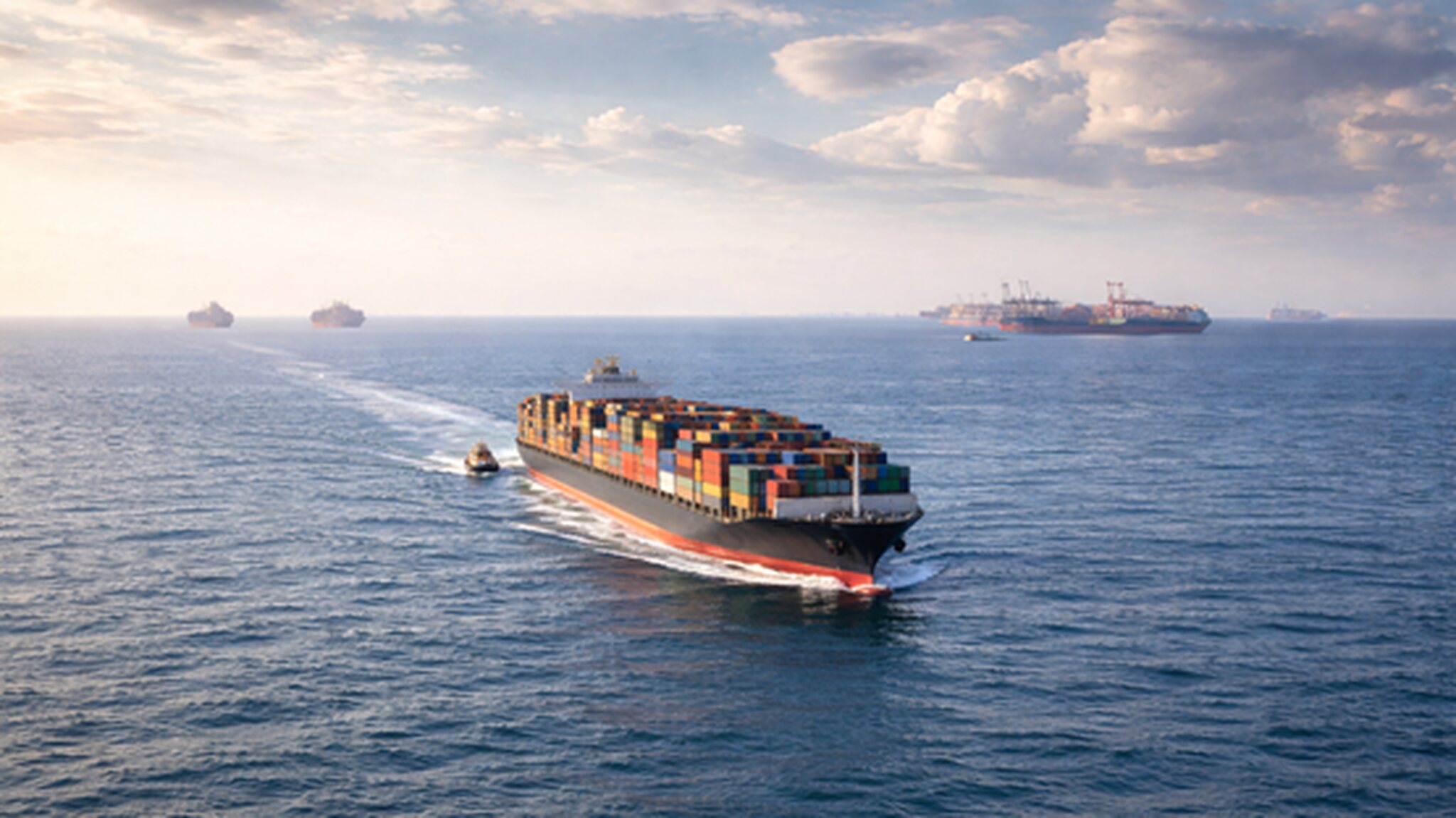
The merchant fleet comprises more than a dozen types of vessels, each of which is designed to carry a specific type of cargo. Container ships carry goods in standard TEU containers and are among the most common vessels on intercontinental routes. Bulk carriers transport loose raw materials such as grain, ore and coal. Tanker ships are used to transport crude oil and petroleum products.
Specialised vessels in maritime transport:
- Reefer containers – the transport of food and pharmaceuticals under controlled temperature conditions, including the use of reefer containers.
- LNG carriers – the transport of liquefied natural gas in special cryogenic tanks.
- Chemical tankers – the carriage of chemical substances in accordance with IMO regulations on dangerous cargoes.
- RO-RO ships – allow vehicles to drive onto the deck and are used to transport cars, lorries and machinery.
- General cargo - the transport of general cargo that does not fill an entire container.
- Project Cargo vessels – handle oversized cargo, such as wind turbine components and steel structures.
The largest Post-Panamax container ships can carry over 20,000 TEU. The incident involving the container ship Ever Given, which blocked the Suez Canal in 2021, demonstrated just how significant individual vessels are to global logistics. Ferries and offshore vessels complement the merchant fleet in regional transport and the servicing of extraction platforms.


What is the difference between FCL and LCL transport?
FCL (Full Container Load) transport involves the exclusive use of an entire container by a single shipper. LCL (Less than Container Load) is a model in which several shippers share the space of a single container. Containerisation has revolutionised maritime transport and remains the most versatile method of shipping goods by sea.
| Feature | Foreign Civilian Language | Left Chest Lobe |
| Use of the container | A whole container for a single shipper | Consolidation of shipments from multiple shippers |
| Unit cost | Lower at high volumes | Cost-effective for small batches |
| Transit time | Shorter (without consolidation) | Longer (loading) |
| Risk of damage | Smaller (no transhipment) | Larger (multi-user) |
| Billing unit | TEU or FEU | CBM (cubic metre) |
In addition to standard 20-foot (TEU) and 40-foot (FEU) containers, specialised types are also used: Open Top containers for cargo exceeding standard height, Flat Rack containers for machinery and structures, High Cube containers with increased capacity, and Pallet Wide containers designed for Euro pallets. Proper stowage and securing of the cargo inside the container is key to the safe transport of general cargo by sea.
What are the main advantages and disadvantages of sea transport?
Maritime transport offers the lowest unit cost of carriage of all modes of transport. A single container ship replaces hundreds of lorries, and greenhouse gas emissions per tonne of cargo are several dozen times lower than in air transport. The absence of size restrictions allows goods to be transported that cannot be shipped by any other means.
The main disadvantages of sea transport:
- Long delivery times – intercontinental routes usually take between 30 and 40 days.
- Dependence on weather conditions – storms and hurricanes can delay voyages and put cargo at risk of damage.
- Port congestion – overloaded terminals are causing longer waiting times for unloading.
- Piracy – on certain routes (the Gulf of Aden, the Strait of Malacca), ships require additional protection.
- Complex documentation – every shipment requires a bill of lading, customs clearance and additional certificates.
The safety of sea transport is, after all, high. Anti-corrosion materials are used to protect metal cargo, and moisture absorbers are employed to prevent condensation inside containers. The operation of a ship requires constant technical supervision, which results in a low incidence of serious incidents. Remember that once the goods arrive at the port, they still need to be delivered to the recipient.
InPost offers courier services that enable the efficient distribution of smaller parcels throughout the country. Once goods arrive at a Polish port, InPost ensures efficient last-mile delivery. A courier will collect the parcel and deliver it directly to the recipient or to one of over 30,000 Paczkomat parcel lockers across Poland.
What documents and formalities are required for sea freight?
Sea freight This requires the preparation of several key documents, without which the goods will not leave the port of departure. The most important of these is the Bill of Lading – a document confirming that the cargo has been loaded onto the vessel, which also serves as proof of ownership of the goods. Each shipment also requires a commercial invoice, a packing list and, in the case of goods covered by customs preferences, a certificate of origin.
Incoterms rules define the allocation of costs and risks between the buyer and the seller. Customs clearance requires an EORI number, and in the case of food or agricultural products, additional phytosanitary and veterinary checks (Sanepid, WIJHARS). Customs procedures vary depending on the destination country. A shipping agency coordinates port formalities, whilst companies with AEO certification benefit from simplified customs procedures. Ensure that the documentation is complete before loading, as any omissions may delay shipment for several days.
What factors influence freight rates and the costs of sea transport?
Sea freight is the basic charge for transporting cargo by ship. The amount depends on the weight and volume of the goods, the route, the type of cargo and current fuel prices. Freight rates fluctuate significantly. The cost of transport includes not only the freight itself, but also a range of surcharges levied by shipowners and port operators.
The most common surcharges on sea freight:
- BAF (Bunker Adjustment Factor) – a fuel surcharge that varies according to oil prices.
- THC (Terminal Handling Charge) – a charge for handling a container at a port terminal.
- Demurrage – a charge for keeping a container beyond the agreed free time
- CAF (Currency Adjustment Factor) – a currency adjustment applied to settlements in different currencies.
Current spot rates can be monitored using the Freightos Baltic Index (FBX), which tracks prices on major routes. Sea freight costs rise during periods of increased demand, such as in the run-up to the festive season. It is also worth considering cargo insurance, which protects the cargo in the event of damage or loss. The supply of tonnage on the market directly affects freight rates.
What role do seaports and container terminals play in logistics?
Seaports are hubs that link waterborne and land transport, where goods are transferred from ships to lorries, trains or inland barges. Among the world’s largest ports, Shanghai, Singapore and Rotterdam lead the way, whilst in Poland the ports of Gdańsk and Gdynia play a key role. The Baltic Hub in Gdańsk is the largest container terminal on the Baltic Sea, handling connections with major ports in Asia and Europe. Strategic sea routes, such as the Suez Canal, reduce the voyage time between Asia and Europe by a dozen or so days. Through our courier network, we handle shipments across the whole country, ensuring the rapid distribution of goods imported by sea.
Choose InPost Subscriptions for businesses and send parcels at a fixed price.
Take one minute to leave your contact details and start sending parcels from as low as 11.89 PLN*.
- One contract for courier and Paczkomat shipments
- Free courier pickups
- Express delivery
- Price guarantee for the duration of the contract
- Fuel surcharge included
- Dedicated post-sale support
* Net price per Paczkomat shipment in the Subscription 600 plan.