Newsletter - what is it and how to create it?
16 August 2025
Email marketing can take many forms, and one of them is a newsletter. Whatever stage your business is at - it can help you build lasting relationships with your customers. From this article, you will find out what functions a well-crafted newsletter fulfils in business and what its benefits are.
Newsletter - what is it?
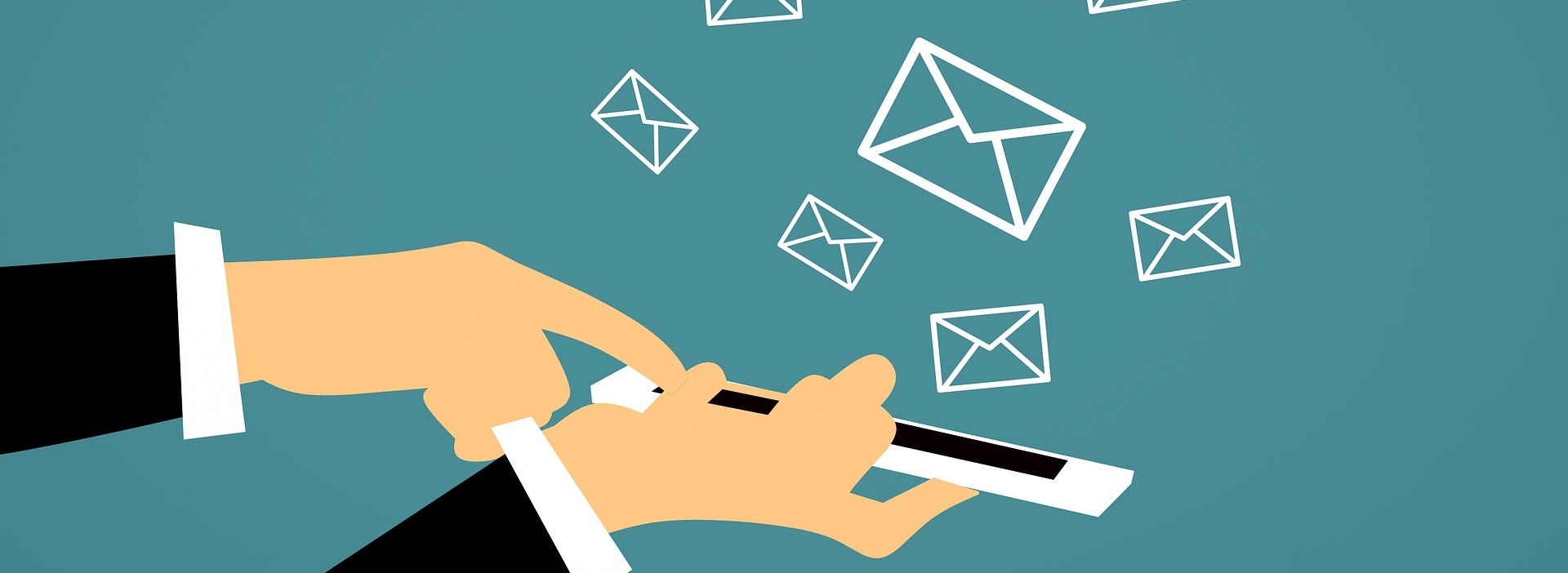
A newsletter is nothing more than an electronic version of an information bulletin created and published, for example, by a company or a creator. We can divide them into those used for external communication, i.e. to build relationships with customers or business partners, and those aimed at improving the flow of information within the company.
The former provide the latest news and updates from the company's life. This can include information about company events, promotions, news, updates and changes. However, in order for the recipient to receive the newsletter, they must give their consent. Most often, a willing person subscribes to it via a form available on the website. Importantly, this type of mailing is not a sales tool - its idea is to strengthen the recipient's relationship with the brand.
How do you create a good newsletter?
Wondering how to create an effective newsletter that will benefit you? We won't hide it - there is no universal recipe, as this form of marketing can be used in a number of different ways depending on your stated marketing objective. However, we will give you some tips to keep in mind in order to achieve your goal. 
Who do you want to send the newsletter to?
If you don't want your newsletter to end up in spam, then determine your target audience first. Determine exactly who your customers are, what values they hold, what they expect and what they want to avoid. This will definitely make it easier for you to create tailored content.
The right definition of target groups can contribute to the success of a marketing campaign. When a potential customer subscribes to a newsletter, he or she expects to receive tailor-made content, such as an individual offer dedicated to him or her.
What's more, isolating the target audience will allow us to send differentiated messages depending on the objective we set before the campaign. After all, we will prepare different content for customers who have not completed their purchase on our website, another for our regular customers, and yet another for people among whom we want to build awareness of our brand. Remember, too, that text messages may differ depending on the gender of the audience - after all, men and women have different purchasing decision processes.
How often to send a newsletter? Regularly!
If you have already launched a newsletter, it is worth ensuring that it is sent regularly. Depending on the type of business, it is important to find the golden mean between the two extremes. Sending newsletters too frequently will result in subscribers unsubscribing from the list, while sending them too infrequently will cause them to lose interest in the brand. By working by trial and error, you are sure to find the best solution.
Newsletter - Design matters!
According to experts, the visual side of an email directly affects the effect it will have on subscribers. The chosen newsletter template should be consistent with the visual identity of our brand. Using the logo, typography and colour scheme used by companies will help to maintain consistency. This will also ensure that recipients associate the messages with the brand.
Ensure responsiveness
For a newsletter to be effective, the emails we send should be responsive. This means that the emails automatically adjust to the resolution of the device on which they are displayed. Otherwise, the content will be unreadable on mobile devices, and this can effectively discourage recipients from reading it. 
What should a newsletter contain? How to attract customers?
A decent newsletter attracts attention. Users are eager to read the content, the brand-customer relationship is strengthened. When everything works as it should, the reader is more likely to visit the shop window to make a purchase. How do you achieve this? Find out our tips.
A book judged by its cover, a newsletter by its... title!
The statistics are clear: for 79% of Polish Internet users, the subject of a news item has a significant impact on whether it will be opened. It is therefore important to ensure that the title is as attractive and inviting as possible for our audience.
Every day dozens, if not hundreds, of messages land in our inboxes, of which only a few catch our attention enough to make us decide to open them and read their contents. So how do we encourage people to open our e-mail? There are several ways!
The first is to use a mini CTA, or call to action. This can be a short message such as 'open', 'receive your discount', etc.
Another way is to use the language of loss. This will prove to be a hit with time-limited offers. Slogans such as "This is the last chance to take advantage of this offer!", "Last day of sale", etc. will work here.
Titles presented in the form of an important - from the customer's perspective - question to which he or she will find the answer in the body of the email, e.g. "How do I make my brand stand out online?", also work well.
Whichever way you decide on, you need to give recipients a decent reason to open your message.
Valuable content
If you have managed to intrigue the recipient enough to open the message, you only have a few seconds to interest them and convince them to read the content. Therefore, it is important that the content is well-crafted and non-accidental.
Avoid walls of text and long product offers. These types of emails will not only be uncomfortable for the reader, but may also effectively discourage them from reading your message. The best way to hold the reader's interest is to use short and easy-to-remember content.
In addition, pay attention to spelling mistakes. Even one minor typo can ruin your newsletter. If you don't have a knack for writing, you can team up with an experienced copywriter.
CTA as an incentive to open links
A CTA (call to action), or call to action, suggests to readers how to respond next. For example, this could be to read a blog article, read the news, take advantage of a promotion or observe the company on social media.
The CTA button should be positioned in such a way that it is immediately striking. Its message, in turn, needs to be clear and transparent and fit the context, e.g. 'read more'. 
In a newsletter, it is not only the content that counts, but also the graphics!
Most of us are visual learners. The fact that we live in an age of image culture does not make things any easier. Therefore, it is worth ensuring that the newsletter features polished images and well-designed graphics.
With their help you can:
- present the product or service accurately;
- show customers how to use it;
- evoke specific emotions and associations to accompany users.
Exploit the full potential of graphic elements to automatically catch the eye and attention of your audience.
How do I personalise my newsletter messages?
A personalised text message allows you to increase the number of opens and click-throughs, and this translates into increased revenue. Impersonal emails are often treated as spam by users, even if they have subscribed to them themselves. Nowadays, almost all mailing programmes allow personalisation of messages.
As we mentioned, the subject line of an email is the first element an internet user pays attention to before deciding to open the message. Taking this into account, it is a good idea to use the subscriber's first or last name already at this point. This gives the recipient the feeling that the message refers individually to him or her and not to an anonymous user.
Personalisation also applies to the sender. Nowadays, on both desktops and mobile devices, the 'from' field in the inbox is particularly highlighted, which catches the recipient's eye and allows them to identify where the email is coming from. Rather than opting for an impersonal name, a combination of first name + last name (optional) + company name will prove to be a much better way. This gives the user the impression that he or she is receiving a message from a human being and not from a "machine".
If your recipients have provided more information than just their first name when signing up for your newsletter, try to take advantage of this. With detailed data, you can easily create an offer tailored to your readers. Messages with special birthday offers are particularly popular. There is also nothing stopping you from using location data in your mailings. In this way, your message reaches the recipients to whom the offer applies. 
How do you avoid getting thrown into spam by sending a newsletter?
Creating great and polished content will not yield satisfactory results if your newsletter lands in spam. How can you avoid this? Fortunately, there are several ways!
Before you start an email marketing campaign, make sure that every person in your address database has consented to receive marketing content from you. If you neglect this, there is a significant risk that not only will your messages end up in spam, but you could also be penalised. This is due to the RODO regulations and the CCPA regarding the strictures on how to handle personal data.
Do not send attachments. Of course, this is one of the purposes of e-mail, but files from unknown senders very often contain viruses or malware that make it possible, for example, to hack into your bank account. For this reason, your e-mail may be treated as dangerous and will be blocked by spam filters. Instead of forwarding files in an attachment, inform recipients that the document in question can be downloaded at a designated location.
You can easily avoid spam when you ask subscribers to add your email address to their address book. This will ensure that spam filters automatically consider the message safe.
In addition, spam filters are particularly sensitive to: words written with Caps Lock, multiple exclamation marks, use of forbidden words and red fonts.
Newsletter - is it worth sending?
The newsletter is a versatile tool and has great potential no matter what industry you are in. Here are the benefits of using it:
- building brand awareness,
- direct contact with customers,
- personalised communication,
- building an expert image,
- building relationships with audiences,
- increase website traffic,
- increasing sales,
- a reliable source of information for clients.
As you can see, newsletters bring with them quite a few gains that cannot be passed by. The key to success is to have a well-developed marketing strategy and to follow tips that increase the chances of a well-executed email marketing campaign.
Summary
A well-run newsletter gives you a tremendous opportunity to build a strong relationship with existing and future customers. Remember, however, that every element of your email marketing strategy should be tested on real audiences. This way you will know what works and what needs to be improved further. Also experiment with the frequency and timing of your mailings. Test subject lines, headlines and CTAs. In this way, your content will be of maximum value to users. In turn, this can translate into good relationships and better sales results.
Choose InPost Subscriptions for businesses and send parcels at a fixed price.
Take one minute to leave your contact details and start sending parcels!
- One contract for courier and Paczkomat shipments
- Free courier pickups
- Express delivery
- Price guarantee for the duration of the contract
- Fuel surcharge included
- Dedicated post-sale support