Artificial intelligence and images – how can AI generate, edit, and optimise product graphics?
For business
AI-generated graphics
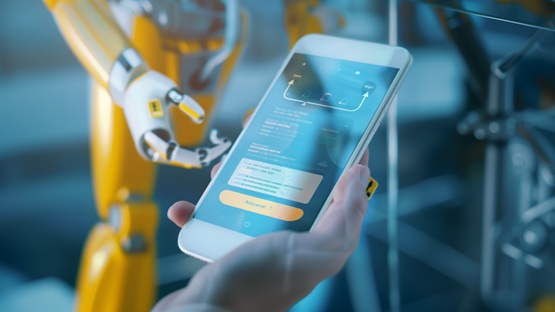
AI-generated graphics
16 November 2025
Product photos in e-commerce have a direct impact on clicks, adding to basket and completing purchases. Customers shopping online cannot touch or see the product in person, which is why the quality and appeal of graphics become a key element of the sales strategy. Artificial intelligence is playing an increasingly important role in their creation – it helps to generate, improve and personalise photos, but it also has its limitations. In this article, we show how AI is changing product photos in online sales and what opportunities it offers now and in the future.
Artificial intelligence and photos – new opportunities for e-commerce
The application of artificial intelligence in working with images opens up completely new and, above all, huge opportunities for online retailers If you are considering such a solution for your business, it is worth bearing in mind that thanks to modern algorithms, you can:
- generate product photos without the need to organise costly photo shoots,
- edit and improve existing photographs faster than in traditional graphics programmes,
- create realistic product visualisations in various colours and styles,
- automatically remove the background or adapt photos to the requirements of different platforms sales,
- and finally scale visual content so as to keep pace with the growing number of products and communication channels.
It is worth presenting the application of AI in generating product photos using a simple example. A clothing shop can generate photos of its collections in various settings without having to hire a studio, models, or photographers. Similarly, a furniture retailer can show how a given product looks in a specific interior, in different lighting conditions or with different wall colours.
What is more, AI can also handle the analysis of customer behaviour data. . Based on this, it can suggest which sales photos will actually work. By using artificial intelligence, you will not only significantly speed up photo production, but also increase the effectiveness of your marketing activities.
 Check out Business Subscriptions
Running a business? Sending many parcels a month? Save on shipping with InPost! Our diverse offer makes it the perfect solution for both small and large companies.
Discover our full range of Subscriptions and submit your inquiry.
Optimising product graphics with AI
Photos in e-commerce serve a variety of purposes. They are meant to attract attention, convey information, evoke emotions, and ultimately encourage purchases. However, it is worth bearing in mind that if something works in one shop, it will not necessarily work in another. . That is why it is important to optimise product graphics, and AI can prove invaluable in this regard.
Thanks to artificial intelligence, it is possible to instantly adapt photos to the standards applicable in marketplaces such as Allegro or Amazon. The algorithm will help you cut out the background, improve colours, increase sharpness, and even adjust the proportions of the photo. A graphic designer would spend several minutes on this, but for AI it takes only a few seconds.
AI will also help you visualise a single product in many different ways. For example, you can present a sports watch as part of a mountain expedition for active people, and in an elegant version in the office.
What is more, by using AI to process product photos, you can test which photos convert better. AI will help you analyse data from advertising campaigns and shop traffic, and then show you which graphics generate the most interest. However, remember that testing does not end there, because in addition to interest, it is worth checking which graphics helped convert sales. This way, you do not have to rely solely on your intuition; you have hard data to support your business.
Online shop owners often focus primarily on the products themselves and their graphic design – and rightly so, because this is the first point of contact with the customer. However, it is worth remembering that Delivery is an equally important part of the shopping experience. : speed, convenience of collection and clear shipping rules can determine whether a customer will return. That is why, in addition to investing in good product photos and AI tools It is also worth finding a reliable logistics partner, such as InPost, which supports shops with services such as deliveries via Paczkomat® parcel lockers. Good graphics can attract customers, and efficient delivery can influence their loyalty.

The future of product photography using artificial intelligence
Although AI currently mainly supports the process of creating and optimising images, the future may bring us even more advanced solutions. Generative AI models already allow us to create hyper-realistic images of products that do not actually exist. This will certainly be appreciated by owners of fashion or furniture shops, where the costs of photo shoots are quite high. .
AI will also help create interactive 3D visualisations. This will allow customers to view products from every angle and in any arrangement. This will bring the online shopping experience closer to that of a brick-and-mortar store. Meanwhile, the automation of entire marketing processes will mean that photos will be generated and published with almost no human involvement. Imagine a system that, after adding a new product to the shop, automatically creates photos in different variants, optimises them and publishes them on the website and then on social media.
Thanks to these possibilities, online shops will gain a huge competitive advantage. They will respond more quickly to market needs while reducing operating costs.
Threats and limitations of artificial intelligence in photo editing
Although, as it may seem, artificial intelligence in image processing can offer you many benefits, it is also worth remembering its limitations and risks.
When you decide to create product photos using AI, you do not have full control over the outcome of your work. . AI can create great images, but sometimes the end result can differ significantly from your expectations. The generated photos can be too perfect, which may ultimately make customers distrustful.
There is also risk of abuse Generating realistic images of products that do not actually exist can lead to manipulation. This is particularly dangerous in industries where customers rely heavily on product visualisation, such as furniture, cosmetics or electronics.
Always bear in mind that AI does not create images from scratch, but relies on huge image databases, which may raise questions about the legality of content use. It is worth remembering that legal regulations in this area may become more restrictive in the future.
Ultimately, do not make everything dependent on technology. Although automation can bring huge savings, relying entirely on AI can lead to your brand losing its uniqueness in the eyes of customers. Creativity and authenticity are still very strong brand assets that help build lasting relationships with customers. Try to find a healthy balance between using artificial intelligence and human labour. This way, you will achieve the best results and not get lost in a sea of mass-generated content.
Choose InPost Subscriptions for businesses and send parcels at a fixed price.
Take one minute to leave your contact details and start sending parcels from as low as 11.89 PLN*.
- One contract for courier and Paczkomat shipments
- Free courier pickups
- Express delivery
- Price guarantee for the duration of the contract
- Fuel surcharge included
- Dedicated post-sale support
* Net price per Paczkomat shipment in the Subscription 600 plan.