Display advertising - what is it? Features of effective advertising
Advertisement

21 October 2023
The market for online advertising is growing steadily and there seems to be no end to its development. Contributing to this is the extraordinary popularity of the global web, which is used by billions of people every day. All of them are also customers, both current and potential. For these reasons, it is impossible to overlook promoting your business online today. One way to show off is through a display campaign. What is it and how can you use it to increase the chances of success for your own business? We are in a hurry to answer!
What is display advertising?
Display advertising consists of all forms of promotion of goods, services and events, presented in the form of a banner displayed on a website. This type of message has a long history, dating back to the mid-1990s, and has since become one of the most important elements of the marketing strategy of both small companies and global corporations.
Display campaigns are used for a variety of purposes, not just sales. A well-prepared advertisement also provides an opportunity to promote the brand's values. In this way, it can stand out from the competition and become permanently inscribed in the minds of consumers. As a result, what is most important for any company - product sales - is also improved.
Forms of display advertising
The definition of display advertising is very broad, as it encompasses almost all methods of promotion via text, image and sound, displayed on websites and in mobile applications. This diversity benefits advertisers, who can thus tailor their messages to the expectations of their audience. A distinction is made between such forms of display advertising as:
- lanes;
- wideo;
- lightbox.
Banners
Banner advertising is the oldest way on the internet to gain the attention of customers. For this reason, it is also the simplest in terms of form. Many of them are boards with a graphic or photograph and the logo of the company offering it. To make them more effective, many advertisers also add text to encourage internet users to make a purchase. Such actions are known as CTAs (call to action). Examples of calls to action include click here, don't wait and order today, check out, etc.
Among the banner adverts, a further distinction can be made between static and pop-up banners. The former are continuously displayed in a location chosen by the retailer or website owner. The latter are windows that appear unexpectedly above the website content. On the web, one can encounter pop-ups that appear immediately after entering the site, as well as those that only appear after a certain period of time. 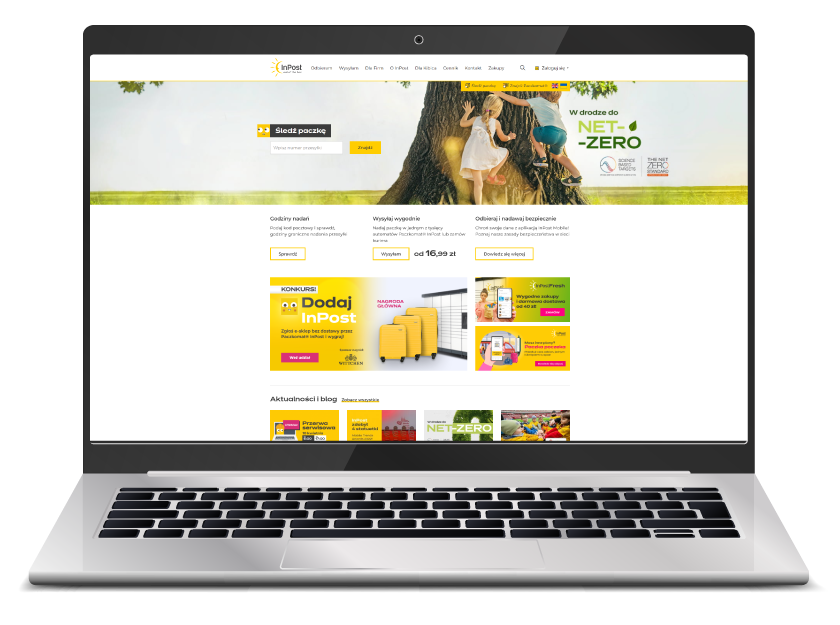
Wideo
Static display adverts over the video format have the advantage of being less intrusive to the web user. However, this makes them less eye-catching than video. It is for this reason that many companies that advertise online choose to shoot short video clips. Video and sound are not only more eye-catching, they are also more accessible to the viewer. What is more, this is currently the format preferred by internet users.
Display advertising placement in the form of video has been adopted not only on blogs, news sites, thematic portals and so on. Promotional videos also work well in social media. The results of campaigns of this type are so good that video even dominates this part of the online space. What is more, the companies in charge of the various social media are successively releasing new, increasingly attractive advertising formats that have an even greater impact on audiences than before.
Lightbox
The growth in the value of the online advertising market has led to an increase in the number of them on websites. How do you stand out in a crowd of other vendors? Years ago, many advertisers made various attempts to attract attention, including buying up all the space on a website. The consequence of this and other practices was the development of browser plug-ins that effectively blocked the presentation of such content.
Blocking plug-ins meant that new advertising formats were needed. Lightboxes, i.e. content displayed in the form of a small window, became an extension of the full-screen board concept. Only after hovering over such a banner with the cursor or clicking with the finger on a headline does it increase in size. Because it is the Internet user who decides whether or not to display the remaining content, the lightbox is a less intrusive and at the same time more effective form of advertising.
Reklama displayowa a banerowe
As you can see, we use the terms display and banner interchangeably. This is irrelevant in this case, because in fact it misses the point to distinguish between them. A display, i.e. a screen with marketing content, is nothing more than a banner and vice versa.
Advantages of display advertising
Display advertising has enough advantages to be invariably valued by advertisers. The biggest of these are the ability to target consumers and the reach, which also facilitates remarketing and conversion rate measurability. As a result, such campaigns are becoming a relatively inexpensive yet effective tool for promoting a company of any size.
 Advertise with InPost
We offer attractive advertising solutions for your business. Check out our full advertising portfolio and choose the best path forward.
Advertise right where your customers pick up their parcels!
Precise profiling of network users
User targeting can be considered the biggest advantage of display advertising. In other words, thanks to the tools provided by the administrators of websites, social networks and search engines, the advertiser is able to precisely determine to whom its offer is to be displayed. For example, with the right data, people aged 30-45, mostly women from large cities and with high incomes, can be considered the most likely recipients of their products.
In this way, two of the most important objectives are simultaneously achieved: proper effectiveness and savings. This is because the advertisement only reaches those who are interested in the product. As a result, it is displayed less frequently (it is not shown to people who do not fit into the established target group), so the retailer only pays for displaying the advertisement to selected users.
Display advertising as a remarketing tool
Display campaigns can cover hundreds of websites and popular social networks. The huge reach that such adverts have in itself increases the chance of many customers being interested in an offer. However, a web user may not always be immediately interested in a purchase. He or she may need time to think about the decision to use the offer or may not have the money to purchase the proposed product at the time.
The advantage of display advertising is that it follows the user. In other words, a person who has not decided to make a purchase and has left the site, the viewed products continue to be displayed on other sites. This increases the chance that the potential customer will not forget about the offer and, after some time, decide to purchase the advertised item. The phenomenon of offering a customer previously viewed products that he or she did not buy (as well as other products from the same offer) is called remarketing.
Monitoring and increasing the conversion rate
Thanks to the measurement tools provided by Google and social media, advertisers can easily check the effectiveness of their actions. Verifying the conversion rate, i.e. the number of orders in relation to the number of clicks on an advert, thus allows a quick response to any mistakes made during the preparation of the campaign.
What could be such a mistake? The wrong choice of target group, for example. It is possible that the measurement of conversions will show that the banner is being clicked on by different people than the retailer originally intended. In this way, he is able to increase the conversion rate. Of course, the online presentation of the adverts itself also helps to improve conversion. After all, there is no way to acquire customers in the midst of a flurry of competition without first coming up with an offer.


Disadvantages of display advertising
The oversaturation of marketing messages is causing Internet users to have an increasingly poor opinion of advertising. In this respect, the problems faced by this market are similar to those plaguing other forms of promotion - on TV, radio, press, games and in the streets. The result is the occurrence of banner blindness and the risk of brand image deterioration. Display advertising also suffers from a problem specific to it.
Blocking of advertising by internet users
No entrepreneur needs to be convinced that it is impossible to create a profitable business without advertising. As a result, everyone wants to be visible on the web. This, in turn, leads to an overabundance of advertising, with the consequence that marketing content is blocked. Ultimately, the money invested in promotion does not have the effect it would have had if all targeted Internet users had seen the advertisement.
However, this cannot be counted on to change. Browser developers are not only allowing blockers to be installed from their app shops, but are themselves adding them to their programmes. This is why the market for social media advertising is growing. The companies managing such sites, which finance their portals by selling space for promotional content, cannot afford to somehow succeed in turning off advertising.
Succumbing to banner blindness
Whether a display ad is displayed on a social network's mobile app, its website or other sites, a potential customer may not notice it. The reason for this is banner blindness, i.e. the audience ignoring the marketing content.
Originally observed in street advertising, this phenomenon has also become an e-commerce problem. Unfortunately, it cannot be eliminated. Every advertiser must therefore accept that some potential customers will simply not notice the banner with the offer.
Risk of damage to brand reputation
The first two disadvantages of display advertising are independent of the retailer. However, it does have an impact on one's own brand image, so this form of promotion does not necessarily have a negative impact on the opinion of the company and its products. It is enough to remember that nowadays it is primarily non-intrusive content that is at a premium.
Banners that cover the entire page, pop-ups with a hidden 'off' button or ads that change their position when the cursor hovers over them are currently counterproductive. Visible but unobtrusive advertising is therefore a better solution, as it offers the chance to generate interest in the offer without annoying the Internet user.
How to create effective display advertising?
Designing a display ad is now very simple. Google has taken care of their intuitive creation by making the Ads tool available to retailers. In any graphics programme, it is sufficient to insert a graphic, photo or other type of background, a caption (e.g. the name of the company and its advertising slogan) and a logo, and then save it in one of four formats:
- JPG;
- PNG;
- GIF;
- HTML5.
The first two file formats allow the creation of a static banner. The others are used to design dynamic images. They are worth looking into, as they draw the user's attention better than still ads.
You can also design flexible display adverts in Google Ads. This is even easier than creating them in one of the graphics programs. To do this, all you need to do is upload individual elements, e.g. a company logo and a product image, separately. Artificial intelligence will then create the banner itself based on the uploaded files. But what is flexible about it? It will adapt its shape and size to different types of devices, so it will look equally good on computers, tablets, smartphones and smart TVs.
Display advertising with InPost for your business
The effectiveness of display advertising nevertheless remains high, which encourages the use of this form of promotion. An excellent way to make it work is to choose our offer for the e-commerce sector. As part of display advertising, we offer our clients the reservation of advertising space in:
- Newsletter - sending mailings in the form of a newsletter to the InPost user base. Graphics with a short description are an effective option.
- InPost Mobile - an application used by several million users. An advertising message can reach many of them via a push message or a banner.
- inpost.co.uk - placement of the banner in the most visited areas by users on both desktop and smartphone.
Find out more about advertising with InPost at inpost.co.uk/advertising.
Advertising your company with InPost? Always a good idea!
Take a minute to leave your contact details and we’ll prepare a tailored offer for you.
There are plenty of possibilities:
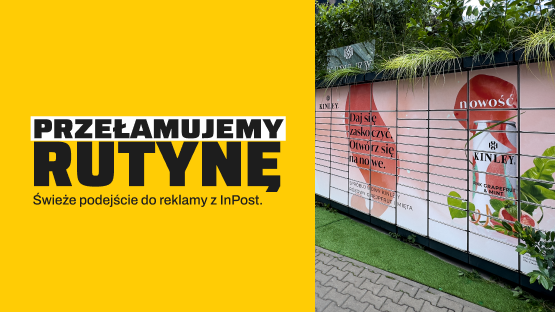
- Branding on Parcel Locker machines
- Ads displayed on Parcel Locker screens
- Sampling of promotional products
- Banner ads on the InPost website
- Advertising in the InPost newsletter
- Push notifications in the InPost Mobile app
Czytaj również