
7 tips to make your warehouse more efficient
27 February 2020
Your e-commerce is growing, presenting you with new challenges? Are you looking for good solutions to make your warehouse more efficient? Check out our tips for you! 
The warehouse is the temple of every entrepreneur who runs an e-commerce business. It is where the goods are located, responsible for the success of the entire business. Over time, a thriving business grows, thus forcing the owner to make certain modifications to improve its operation. These modifications also largely concern the warehouse.
It is worth remembering that improving warehouse efficiency is an ongoing process. It takes time to achieve the first results. It is important that all employees are fully committed to working together to improve the warehouse and the activities taking place in it.
How to improve warehouse efficiency?
There are several ways to make a warehouse more efficient. These are not complicated - they usually involve good logistics and space organisation. Among the most commonly mentioned tips are:
-
Good organisation of space
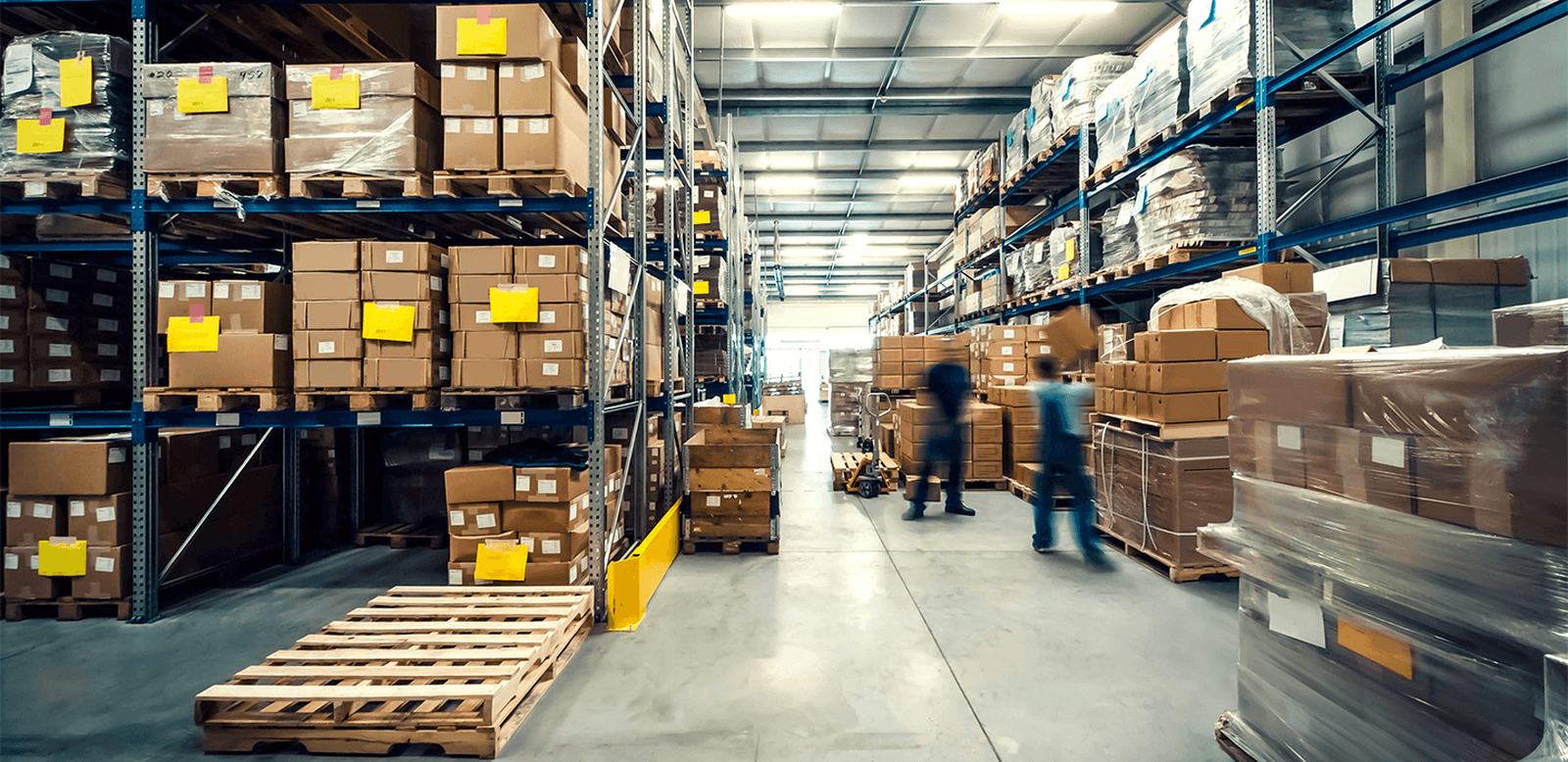
A well-organised space is a priority when it comes to warehouse efficiency. Before starting to store goods, it is necessary to properly prepare the place where they will be located for the coming period. It is important to equip the warehouse with all the necessary accessories and equipment, and to develop a good and logical plan for the warehouse layout.
It helps to determine where best to store different types of goods and where best to set up moving areas and workstations for the crew. When organising space, it is important to remember to maximise - develop the plan so that as little space as possible is wasted.
-
Orderly and labelled goods
A well-organised space must also be properly organised. To do this, try to find the right tactics for your warehouse. Goods are most often grouped according to their characteristics - fresh produce is stored in a separate area and large items in another.
Also remember to label your goods appropriately. This is important because, with tags or labels, it is much easier to find the product you are looking for, thereby streamlining the order process for your customers.
-
Investment in automation
In this day and age, it makes sense to bet on automation. However, this does not mean replacing employees with machines. Try to implement mechanised solutions in selected areas of your warehouse. Invest in machines that can carry out tasks that take up too much of your time much more efficiently and precisely. For example, a machine for automatic strapping of goods.
-
The right logistics strategy
The logistics strategy determines how the warehouse is managed. Its choice should depend on a number of factors, including the number of orders, the working staff or the storage area.
If the number of orders does not exceed 50 per day, the crew is 5 people and the warehouse area is less than 500 m² - the orders can be picked separately, by employees with different functions on the warehouse. If the number of orders is higher, the orders should be completed in a series and the team members should work in designated positions.
When the daily number of orders exceeds 1,000 items, you should think about implementing automated solutions and an electronic management system. With a further increase in the number of orders, it is worth considering the introduction of logistics outsourcing.
-
Continuous quality control
The efficiency of the warehouse is also linked to customer satisfaction - the less goods that are returned to the warehouse, the more efficient the handling process. It is therefore important to remember to carry out an inventory from time to time, enabling you to check the quality and condition of your stocked items.
-
Organised workplaces
Every employer should take care of his or her staff - especially when they are responsible for the goods that are the source of their income. That is why it is important to have organised workstations in the warehouse. Each member of the crew should have all the necessary equipment and items to enable them to do their job. In a warehouse, it will also be important that the organised space allows workers to move freely to inspect products or prepare them for dispatch to the customer.
-
Monitoring of performance indicators
Efficiency can also be improved by monitoring the performance of the warehouse - nothing can tell us more about the warehouse than the data collected. Key performance indicators relate to current work, performed in real time, and work that has already been performed (historical indicators). Current indicators include: the current state of the warehouse, human resources, equipment capabilities, as well as deliveries or shipments made. The historical indicators include: the degree of warehouse utilisation, the number of goods issued, or stock compliance.
Warehousing plays an important role when it comes to running e-commerce. The right space and conditions for storing goods can affect the quality and speed of order processing. Warehousing and other logistical duties can be handled by a courier company. Sound interesting? Find out what InPost Fulfillment is, what benefits it guarantees and start working with us."
Grow your business with InPost Fulfillment
Storage, packing, shipping – you don’t have to do it yourself! Leave it to the professionals.
Take a minute to leave your contact details and gain more time while reducing costs.
- Lightning-fast delivery
- Cost reduction
- Zero shipping issues
- Peak-season support
- Tailor-made offer
Czytaj również