
What does ecology mean and what impact does it have on our daily choices?


27 February 2022
Through ecology, informed action can be taken that has a significant impact on the proper functioning of the environment. What does ecology do? Why is it so important in everyday life? These and other questions are answered below!
What does ecology mean?
The term ecology was introduced in the 19th century by the German researcher Ernst Haeckel. Ecology is a combination of two Greek words: oíkos (home, environment) and logos (science). The very name indicates that it is the science of the environment. However, in order to understand exactly what this particular branch of biology is all about, it is useful to look at its definition. So - what is ecology?
Ecology is the interdisciplinary field of biology that involves the study of the relationship between living organisms (biocenosis) and the environment (biotope). It is also important to describe the phenomena that occur in nature in order to take appropriate steps to protect the environment in the future.
Basic ecological concepts
Like any field, ecology also contains key words, the explanation of which helps to understand this science. Below we explain the basic expressions and their definitions.
- Biosphere - the layer of the Earth inhabited by living organisms.
- Ecologist - studies the structure and functioning of the biosphere.
- Ecosystem - a complex ecological system consisting of a biocenosis and a biotope.
- Population - an assemblage of organisms of one species living in a particular environment.
Ecology - definition for children
Ecology teaches about how animals and plants behave in their natural environment (on land, in water and in the air). Ecologists study and teach what conditions different species of living organisms should live in. This field of science helps to understand how nature works and answers the question of what to do to improve nature's actions - so that environmental conditions are conducive to life for all animals and plants. In this way, people can prevent unwanted effects that could consequently upset the harmony in nature and lead to complex problems. So: ecology is the science of nature, i.e. of all living organisms and the environment in which they live.


Different types of ecology
Ecology also draws on extensive knowledge from other areas of biology. In order to fully understand the interrelationships that occur in nature, ecologists have to invest a lot of time and patience. Their research helps to understand what interactions occur between living organisms and the surrounding environment. Ecology is divided into species ecology and the ecology of multispecies assemblages.
Ecology of the species
This branch of ecology is concerned with the study of life changes and observations of the genetic determinants of individual species of living organisms and the traits that promote adaptation to the environment. Species ecology includes:
- Population ecology (populaciology) - studies differences in the population size of one species that are caused by changes in the environment. By studying population change, ecologists can analyse what factors affect a species;
- Autoecology - the branch dealing with the study and determination of interdependencies between individual living organisms and the environment;
- Evolutionary ecology - the science that studies the history and evolution of animal and plant species;
- Synecology - the study of the interdependence between animals and plants and the environment.
Ecology of multi-species assemblages
This is the branch that deals with the study of the relationships between several species of animals and plants. Multispecies assemblage ecology includes the aforementioned synecology and biocenology, a branch of ecology dealing with the study and observation of relationships between living organisms (biocenosis).
Research areas of ecology
Ecology is an interdisciplinary science that studies all the conditions and relationships between a biocenosis and a biotope (ecosystem). Ecologists observe and describe how individual living organisms interact with each other in the natural environment.
Ecology in everyday life - how to live more eco?
In the vernacular, ecology also means activities that are environmentally friendly. Nowadays, a kind of 'eco fashion' has emerged, so that one can easily help to reduce the production of rubbish or harmful chemicals that cause a lot of destruction in nature. Even the smallest actions of each person can contribute to protecting and improving the environment. How do you undertake ecological changes in your everyday life and where do you start?
- Prudent consumption - it is worth starting your organic adventure by putting an end to food waste. Nowadays, there is an overabundance of food products, which very often go bad in fridges or cupboards. Instead of buying excess food, you can start planning your meals even a week ahead. It is also a good idea to store products properly so that they are fresh and fit to eat for as long as possible.
- Saving energy - among other things, it is worth remembering to always unplug any chargers or appliances that are not being used because they are constantly consuming electricity. It is also important to switch off unnecessary lighting, use energy-saving light bulbs, wash at low temperatures and choose eco-friendly modes for household appliances.
- Segregating rubbish - recycling allows specific raw materials to be used to produce new items. By segregating, used items will be reused instead of ending up in landfill - which is why it is so important to sort household waste.
- Eco-friendly fashion - fast-fashion clothing manufacturers encourage customers to buy fashionable clothes every day. However, it should be borne in mind that by supporting such brands, huge amounts of materials and energy are used, which also results in more waste. Instead, it makes sense to buy less frequently, but better quality clothes that will last for years. For fashion fans, it is also recommended to buy second-hand items. In this way you can often find unique and unrepeatable clothes and accessories that are not available in the shopping centres.
- Saving water - it is also important to save water. Remember to tighten the tap: it should not drip. If you want to do the laundry or use the dishwasher, try to fill the appliance completely to make the most efficient use of these appliances.
There are many more ways to implement green behaviour. The most important thing, however, is not to contribute to the overproduction of waste and to keep water and electricity consumption as low as possible.
What does ecology mean and what are its areas of work?
In order to act appropriately and care for the environment, there is a need for constant education and reminding the public of the importance of ecology today. Fortunately, from the research of the Polish Ministry for the Environment and Climate, it can be seen that this awareness is increasing. People are paying more and more attention to how they use resources such as electricity and water, which is of crucial importance for the climate. Also thanks to environmental reminders, consumers are increasingly choosing to buy recycled or environmentally friendly products. 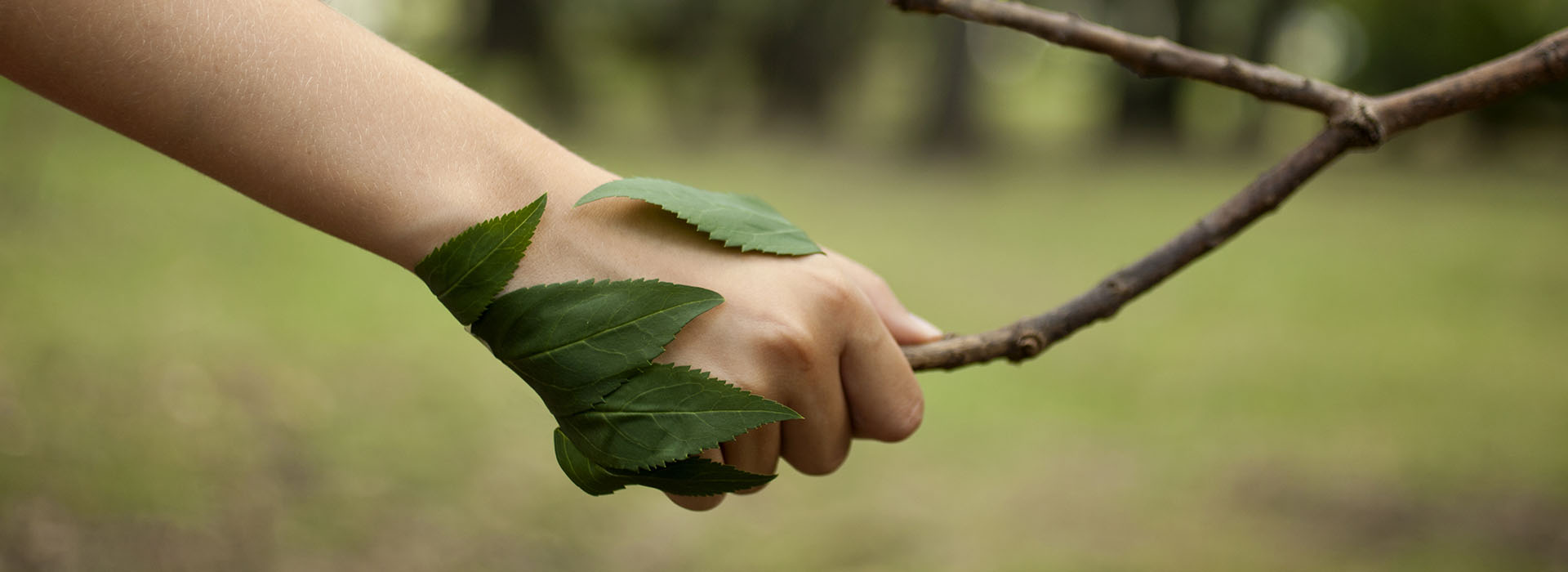
Ecology is a multidisciplinary science, which is why ecologists spend a lot of time on research from different areas divided into agricultural ecology (agroecology), forest ecology, social ecology or molecular ecology, among others. Through thorough research it is possible to take appropriate steps and actions adapted to the area.
Ecology as a science
The field of biology, which is ecology, teaches what processes occur in nature and what the various behaviours and adaptations of living organisms to the surrounding environment depend on. The research makes it possible to counteract the sometimes drastic consequences from which nature could suffer. Ecologists also often analyse plans for the construction of new roads and buildings in order to prevent violations of ecosystems that are sensitive to rapid change. Ecology is a very important science that makes it possible to use nature's resources in a responsible way and to counteract unwanted consequences that may arise due to human interference.
Ecology and renewable energy sources
In the media, it is increasingly common to hear about 'green energy' - or renewable energy sources (RES). This provides an alternative to non-renewable sources, i.e. coal, oil, gas and, in the long term, uranium - their extraction is complicated and lengthy. But what does 'renewable source' mean? An alternative solution includes the use of energy from resources that are rapidly regenerated and do not involve dangerous impacts on nature. The use of RES also does not harm the economy. Renewable energy sources include energy:
- geothermal,
- winds,
- water,
- biomass,
- słońca.
Ecology, in the scientific as well as in the social sense, is an important aspect to avoid serious consequences that could endanger the lives of many animal, plant and human species. It is therefore worth caring for nature and using ecological solutions to help protect nature at every turn.