
What are the departments of ecology and what do they do?


20 May 2022
The various departments of ecology and their staff deal with diverse parts of the environment. Although ecology is divided into two main divisions, each division covers an extremely broad research spectrum, through which we are able to acquire a comprehensive knowledge of the world around us. In the following article, you will find all the most important information about ecology, its specific divisions and what exactly the ecologists of each sector of this science do.
What is ecology?
Many people today wonder what ecology is and what it does. Doubts among some may stem from a strong trend in recent years that emphasises the popularisation of potential environmental activities. Few people, however, cite a textbook definition of ecology that talks about its main divisions. Ecology is the science of the relationships and dependencies between individual living organisms and the environment. The Earth's population has recognised these connections since ancient times, but ecology as a separate science has only been distinguished for several centuries.


What are the two main divisions of ecology?
There are major divisions of ecology - the ecology of species and the ecology of multispecies assemblages. Species ecology is divided into: population ecology and evolutionary ecology. The ecology of multispecies assemblages, on the other hand, is biocenology, synecology and the study of ecosystem formation. The different fields of ecology sound somewhat complicated, but they actually make it much easier to divide and understand this intricate and extensive science.
What is species ecology?
Species ecology is the branch of ecology that deals with populations of different species of living organisms and any changes occurring in their mode of functioning, distribution or abundance. There used to be a distinction between autecology (dedicated to specific organisms) and synecology (whose branch included groups of organisms). Today, species ecology includes population ecology, which deals with the abundance of organisms of specific species; and evolutionary ecology, which studies changes in the behaviour or daily life of organisms, including those that are extinct.
What is the ecology of multi-species assemblages?
The second branch of ecology is the ecology of multispecies assemblages, i.e. biocenology, synecology and the study of ecosystem formation. To understand what biocenology is, it is useful to first recall the definition of a biocenosis. It is an assemblage of organisms, e.g. plants or animals, which belong to different species, but which share certain common features due to inhabiting the same part of the environment.
Interestingly, when combined with a biotope, which is the space or habitat in which these organisms live, a biocenosis constitutes an ecosystem. Biocenology is therefore a part of ecology in which researchers classify the organisms that make up a given biocenosis and analyse how they function.
Synecology used to be one of the two main branches of ecology. Currently, it is a discipline belonging to multispecies systems ecology and is concerned with monitoring individual groups of organisms and their effects on the surrounding environment. Synecological ecologists also look at how organisms coexist with other groups and what structures are formed in these groups. Multispecies assemblage ecology also investigates how the structures of individual ecosystems are formed.
What is the application of the different branches of ecology in the modern world?
The different departments of ecology are not just a rigid scientific division, but also the real, everyday activities of researchers. What does species ecology do? Ecologists who monitor individual species groups of animals or plants are able to assess whether particular organisms are, for example, threatened with extinction. Through such surveys, individual species are placed under protection, so that their lifespan is significantly extended. This task falls primarily to population ecology.
Evolutionary ecology allows us to observe the changes that occur in the functioning of individual organisms. Thanks to it, we are able to acquire knowledge about animals or plants, even those that became extinct millions of years ago. The study of changes in the functioning of species allows us to better understand the world around us. It allows us to find the causes of particular behaviours, diseases or differences between individuals.
Multispecies assemblage ecology, which deals with the study of both living organisms and their environments, provides a working knowledge of the ecosystems in which we live. It also provides an idea of the current state of the environment and what might await it in the future.
Thanks to researchers who continuously monitor the changes in nature, we know how to improve the environment around us and how to ensure that it continues to function properly for longer. As a result, we know what actions are worth incorporating into our daily habits and what long-term programmes should be implemented by each country's authorities.
Research within ecology identifies the role of human impact on the environment and how much it can change. Unfortunately, scenarios for the future of the biosphere are not optimistic and it is predicted, among other things, that more than half of the coral reefs now present in the seas and oceans will have disappeared by 2030, and that many protected species of living organisms will become extinct in the next decade or so. One of the missions of modern ecology is therefore to be able to plan measures to protect the ecosystems through which humanity and other organisms draw the resources necessary for life. 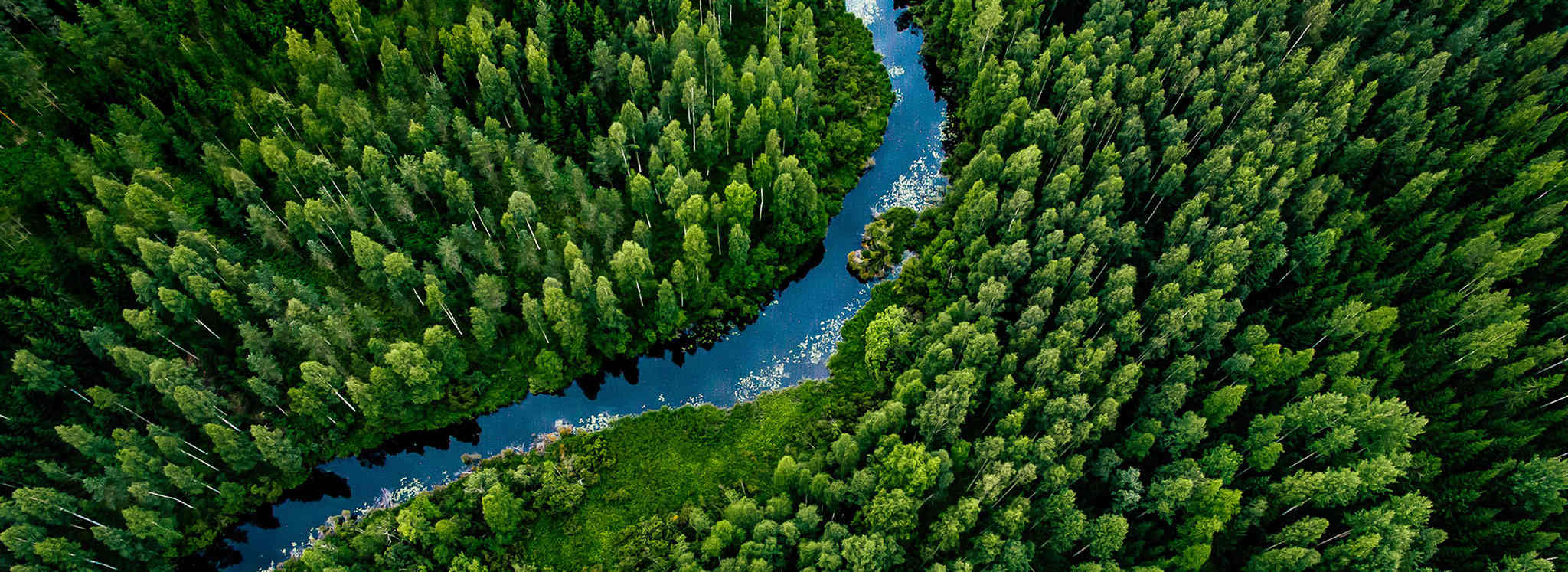
What is the subject of the study of ecology?
Knowledge of ecology and awareness of its role in the functioning of the modern world is vital. The various departments of ecology are concerned with deepening knowledge of the ecosystem and all its areas. By monitoring the functioning of living organisms by ecologists and analysing these observations, new relationships and changes in the life of individual animals or plants are constantly being discovered. Revealing their needs and potential threats prompts the search for solutions to provide systemic protection for species. The subject of the study of ecology is therefore every living organism and the environment in which it functions.
Information about ecology is complemented by a definition of ecologist. It is a profession that cannot be held by everyone. An ecologist is a trained scientist who conducts research on a particular branch of ecology, be it the ecology of a species or multi-species assemblages. Beware of the increasingly frequent phone calls where you may hear a voice in the receiver saying that the caller is being contacted by the ecology support department. This is because these are not real consultants, but recorded bots offering subsidies for the installation of photovoltaic panels. The purpose of the calls is to collect personal data from the callers.
How to become an environmentalist?
To become an ecologist, you must first and foremost be a person who is sensitive to the welfare of the planet and all living organisms. Regardless of which departments of ecology are in your area of interest, biology will certainly come in handy at school and at the baccalaureate. To tackle this demanding science professionally, you will need a university degree in a subject closely related to ecology and research in the laboratory. This could be, for example, environmental protection and engineering, bioeconomy, biology and much more.
It is also worth knowing that the work of an ecologist is not only that of working in a laboratory and studying individual organisms. An ecologist can also be a community activist, spreading knowledge and raising awareness about the current state of the environment.
Functioning in the environment and being part of a species population obliges us to delve into the structure of the biosphere and to be aware of the consequences of human actions. Coexistence with the living organisms on the planet is made possible by the in-depth research of ecologists. Much is being said about recycling and other methods of fighting for the well-being of the environment, so it is worth using this knowledge and contributing to improving the existence of living organisms.