
Sending a parcel from Portugal to Poland – how to do it and how long delivery takes

AI-generated graphics
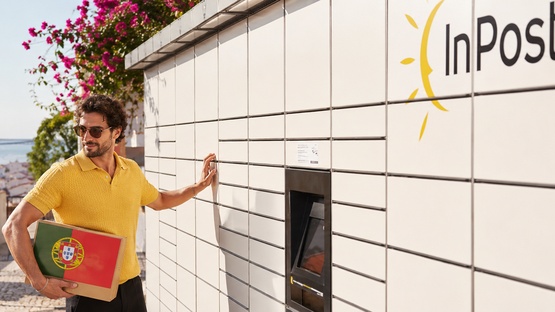
AI-generated graphics
2 August 2026
Sending a parcel from Portugal to Poland usually takes between 3 and 6 working days, but the key to a speedy delivery is ensuring it is posted efficiently. Find out how to prepare your parcel step by step, generate the label correctly and send it safely straight to Poland!
Portugal v Poland in five points:
-
Delivery time: an estimated 3 to 6 working days; the operator guarantees delivery by the 11th at the latest.
-
Start counting: the next working day after the day of dispatch, for collections and deliveries from Monday to Friday.
-
Prices Gross: 58.99 zł for a Small pack, 83.99 zł for a Medium pack and 125.99 zł for a Large pack.
-
Order: Quick Post or the InPost Mobile app, with a choice of a label or a QR code.
How do I send a parcel from Portugal to Poland?
Sending a parcel from Portugal to Poland does not require any customs formalities. Both countries are part of the European Union, so the parcel is not subject to customs clearance or a tax declaration. All you need to do is pack the parcel securely and generate an address label or QR code online.
The dispatch is generated by Express Parcel Services or an app InPost Mobile, specifying the country of dispatch, the parcel size and the sender’s and recipient’s details. Once you’ve paid, you’ll receive a label and a QR code by email, so you can post your parcel with the printed label or show the QR code to be scanned at a Ponto Pack point or at a Paczkomat® parcel locker.
Rules sending a parcel from abroad to Poland They are specific to each country, and the Portuguese version offers both options — a label and a QR code.
 Send a parcel abroad
International shipping? Choose Paczkomat®!
Effortless sending and reliable delivery – with InPost, your parcel crosses borders with ease.
Selecting a point on the map
You select the dispatch location in Portugal and the collection point in Poland on the map when completing the form. Post Office Drop-off Point Finder It has a filter by venue type, so you can choose to see either just slot machines or just partner venues.
How long does it take for a parcel to be delivered from Portugal?
The estimated delivery time from Portugal to Poland is between 3 and 6 working days. The terms and conditions also specify a deadline: the operator undertakes to deliver the parcel within 11 working days at the latest. You can refer to this date should the delivery be delayed.
The estimated delivery time is for information purposes only and You can see it on the platform when you’re placing your order, before you pay. Please read this alongside the calendar, as collections and deliveries take place from Monday to Friday, and the weekend is not included in the timeframe.
The countdown starts once the parcel has been posted
The day of posting is not included in the time limit – the countdown only begins from the next working day. Neither early payment nor the waiting time for collection at the collection point will shorten or extend this deadline. You’ll see the deadline and the rate in the same step of the order process anyway.


How much does it cost to send a parcel from Portugal?
You can send a small parcel from Portugal for 58.99 zł, a medium one for 83.99 zł, and a large one for 125.99 zł - gross rates, calculated per parcel.
The box must fall within one of the following three limits:
-
Small - up to 8 × 38 × 64 cm.
-
Average - up to 19 × 38 × 64 cm.
-
Large - up to 39 × 38 × 64 cm.
The dimensions of the packed box determine which rate you will pay. The weight limit is the same for all three sizes and amounts to 25 kg, and the box must not be compressed, so that it fits in the lower parcel locker. Rates are set out in the price list valid on the date of the order, published on inpost.pl, and the delivery time given is approximate.
Tracking a parcel on its way to Poland
From the moment it is posted, the parcel has its own tracking number. You’ll find this on the posting confirmation, and you can pass it on to the recipient so they can track the parcel’s journey as it progresses.
There are two ways to check the status: by track a parcel by its reference number on the InPost website or in the InPost Mobile app. Further updates appear at each stage of the process, and on such a long journey the intervals between them can be longer, which is to be expected during the course of the delivery.
Collecting a parcel from Portugal in Poland
The recipient is notified that a parcel is waiting at a collection point via text message, email or an in-app notification. The parcel contains a collection code and a QR code, and the countdown begins at that very moment: 48 hours via Paczkomat® and 72 hours at a PaczkoPunkt - Collection is only available during the centre’s opening hours.
Packing a parcel for dispatch
A parcel from Portugal travels across the entire continent, changes modes of transport and ends up on the sorting belts. The packaging has to withstand the whole journey, so what matters is the rigidity of the cardboard box and whether the contents have room to shift around. The sender is responsible for preparing and packing the parcel.
Prepare the cardboard as follows:
-
Choose packaging that suits the dimensions and weight of the contents.
-
Remove any old labels and markings if the box has already been in circulation.
-
Fill in the gaps so that nothing shifts during transport.
-
Stick the label onto a flat, upper surface, away from the closure.
-
Leave the code exposed – it must not be covered by any tape or sticker.
Restrictions on the contents of a parcel
Some items cannot be included in a parcel, no matter how carefully you pack them. The list of items excluded from carriage is attached to the terms and conditions, and its contents vary depending on the country of delivery.
In practice, the following are most commonly excluded:
-
Alcohol and tobacco, including e-cigarettes, in any form.
-
Large bottles of cosmetics and cleaning products exceeding 750 ml in a single package.
-
Contents of the first-aid kit, excluding Class I medical devices.
-
Food from the fridge and anything that needs to be kept at a controlled temperature.
-
Pressurised containers, i.e. aerosols and flammable goods.